Page 97 - My FlipBook
P. 97
Brochure 2020
and view switching. In contrast, existing personalized recommenders, e.g., Collaborative Filtering (CF) and
Bayesian Personalized Ranking (BPR), fail to consider social interactions. Moreover, group recommenders,
such as the preference aggregators devised through Attention Networks or Graph Neural Networks, sacri ce
personal preferences by assigning a unified set of items for the entire group of users based only on their
aggregate preference. To determine user satisfaction in MVD, we will formulate a new optimization problem,
Social-aware XR Group-Item Configuration (SXGIC), to maximize overall personal satisfaction while also
ensuring that: 1) no duplicated items are displayed at di erent slots to a user; 2) the number of users sharing
group views of the same item is controlled; 3) similar and/or complementary items are placed near each other;
and 4) the partitioning of shared-view subgroups between consecutive display slots is similar. We will prove
the NP-hardness and inapproximability of SXGIC, and propose an Integer Program (IP) as a baseline approach
for accurately solving SXGIC. We will then devise randomized rounding strategies to construct promising MVD
con gurations by exploiting the fractional solutions of the linearly relaxed IP. Finally, we will incorporate the
proposed methods into a prototype XR shopping application built in Unity with hTC VIVE HMD and Microsoft
HoloLens, allowing us to conduct real-user studies to validate the correlation between real user satisfaction
and our optimization problem.
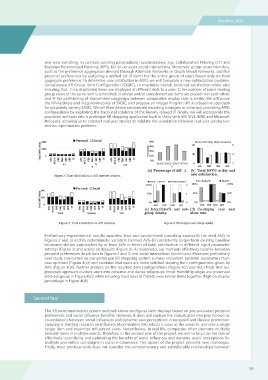
Figure 2 : Total satisfaction vs. di . number of users.
Figure 3 : Total satisfaction vs. di . datasets. Figure 4 : Prototype user study results.
Preliminary experimental results manifest that our randomized rounding approach (termed AVG in
Figures 2 and 3) and its deterministic variation (termed AVG-D) consistently outperform existing baseline
recommendation approaches by at least 30% in terms of total satisfaction in different input parameter
settings (Figure 2) and across all datasets (Figure 3). As evidenced, our methods e ectively balance between
personal preferences (black bars in Figures 2 and 3) and social interactions (white bars). Moreover, preliminary
user study conducted on our prototype XR shopping system surveys important problem parameters from
user opinions (Figure 4(a)) and validates that users are more satis ed viewing item con gurations given by
AVG (Figure 4(b)). Further analysis on the resulted item configurations (Figure 4(c) and 4(d)) finds that our
proposed approach clusters users into cohesive and dense subgroups (most friendship edges are preserved
intra-subgroup in Figure 4(c)) while ensuring most pairs of friends view similar items together (high co-display
percentage in Figure 4(d)).
Second Year
The XR recommendation system outlined above con gures item displays based on pre-evaluated personal
preferences and social in uence bene ts. However, it does not capture the complicated interplay (known as
co-evolution) between social in uences and dynamic user perceptions in repeated and diverse promotion
campaigns. Existing research on In uence Maximization (IM) selects k users as the seeds to promote a single
target item and maximize influenced users. Nevertheless, in real life, companies often promote multiple
relevant items in multiple events. Therefore, in the second year of the project, we aim to focus on the task of
e ectively quantifying and optimizing the bene ts of social in uences and dynamic users’ perceptions for
multiple promotion campaigns in social e-commerce. This aspect of the project presents new challenges.
Firstly, most previous work does not consider the complementary and substitutable relationships between
95
and view switching. In contrast, existing personalized recommenders, e.g., Collaborative Filtering (CF) and
Bayesian Personalized Ranking (BPR), fail to consider social interactions. Moreover, group recommenders,
such as the preference aggregators devised through Attention Networks or Graph Neural Networks, sacri ce
personal preferences by assigning a unified set of items for the entire group of users based only on their
aggregate preference. To determine user satisfaction in MVD, we will formulate a new optimization problem,
Social-aware XR Group-Item Configuration (SXGIC), to maximize overall personal satisfaction while also
ensuring that: 1) no duplicated items are displayed at di erent slots to a user; 2) the number of users sharing
group views of the same item is controlled; 3) similar and/or complementary items are placed near each other;
and 4) the partitioning of shared-view subgroups between consecutive display slots is similar. We will prove
the NP-hardness and inapproximability of SXGIC, and propose an Integer Program (IP) as a baseline approach
for accurately solving SXGIC. We will then devise randomized rounding strategies to construct promising MVD
con gurations by exploiting the fractional solutions of the linearly relaxed IP. Finally, we will incorporate the
proposed methods into a prototype XR shopping application built in Unity with hTC VIVE HMD and Microsoft
HoloLens, allowing us to conduct real-user studies to validate the correlation between real user satisfaction
and our optimization problem.
Figure 2 : Total satisfaction vs. di . number of users.
Figure 3 : Total satisfaction vs. di . datasets. Figure 4 : Prototype user study results.
Preliminary experimental results manifest that our randomized rounding approach (termed AVG in
Figures 2 and 3) and its deterministic variation (termed AVG-D) consistently outperform existing baseline
recommendation approaches by at least 30% in terms of total satisfaction in different input parameter
settings (Figure 2) and across all datasets (Figure 3). As evidenced, our methods e ectively balance between
personal preferences (black bars in Figures 2 and 3) and social interactions (white bars). Moreover, preliminary
user study conducted on our prototype XR shopping system surveys important problem parameters from
user opinions (Figure 4(a)) and validates that users are more satis ed viewing item con gurations given by
AVG (Figure 4(b)). Further analysis on the resulted item configurations (Figure 4(c) and 4(d)) finds that our
proposed approach clusters users into cohesive and dense subgroups (most friendship edges are preserved
intra-subgroup in Figure 4(c)) while ensuring most pairs of friends view similar items together (high co-display
percentage in Figure 4(d)).
Second Year
The XR recommendation system outlined above con gures item displays based on pre-evaluated personal
preferences and social in uence bene ts. However, it does not capture the complicated interplay (known as
co-evolution) between social in uences and dynamic user perceptions in repeated and diverse promotion
campaigns. Existing research on In uence Maximization (IM) selects k users as the seeds to promote a single
target item and maximize influenced users. Nevertheless, in real life, companies often promote multiple
relevant items in multiple events. Therefore, in the second year of the project, we aim to focus on the task of
e ectively quantifying and optimizing the bene ts of social in uences and dynamic users’ perceptions for
multiple promotion campaigns in social e-commerce. This aspect of the project presents new challenges.
Firstly, most previous work does not consider the complementary and substitutable relationships between
95